
Chemical Laboratories: Fire Prevention Starts with Proper Storage
Chemical laboratories are inherently exposed to risks associated with the presence and handling of flammable, reactive, or volatile substances. For this reason, fire prevention represents one of the key pillars of laboratory safety and begins with the correct management of hazardous materials.
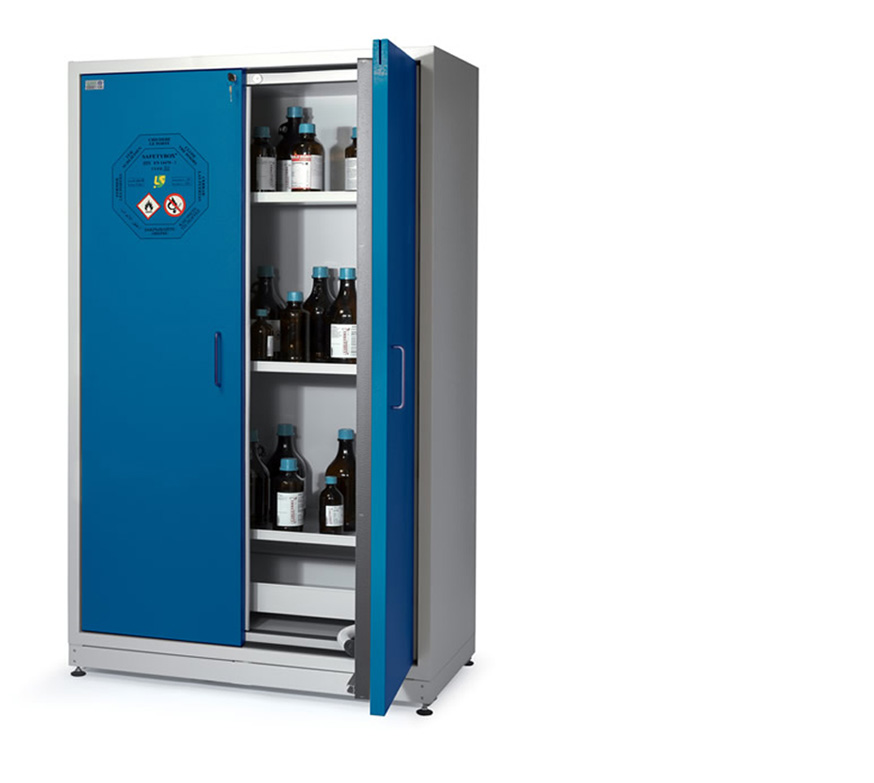
One of the most effective strategies for reducing fire risk is the safe storage of flammable chemicals in certified safety cabinets. These devices are designed to help limit fire propagation and contribute to protecting the working environment in the event of an incident.
Safety cabinets intended for flammable liquids must comply with the EN 14470-1 standard, which defines requirements related to fire resistance, ventilation systems, structural design, and automatic door closing mechanisms. Depending on the fire‑resistance class (30, 60, or 90 minutes), these cabinets help provide valuable time for personnel evacuation and for emergency response systems to operate.
In addition to fire resistance, proper cabinet ventilation is important in order to help limit the accumulation of flammable vapours inside the storage compartment. In some installations, dedicated extraction systems may be integrated to improve vapour management.
The positioning of the cabinet within the laboratory is also an important safety consideration. Flammable storage cabinets should not be installed near heat sources, open flames, or equipment capable of generating sparks. Adequate accessibility and unobstructed evacuation routes should also be ensured.
Another important safety factor is the correct separation of incompatible substances. For example, oxidisers and flammable solvents should not be stored in the same cabinet.
Labor Security System develops safety cabinets designed to support the proper storage of flammable substances in laboratories and chemical industries, helping reduce risks associated with hazardous material storage.
Fire prevention does not depend on a single device but on a combination of measures, including staff training, clear operating procedures, and the use of appropriate safety equipment.
One of the most effective strategies for reducing fire risk is the safe storage of flammable chemicals in certified safety cabinets. These devices are designed to help limit fire propagation and contribute to protecting the working environment in the event of an incident.
Safety cabinets intended for flammable liquids must comply with the EN 14470-1 standard, which defines requirements related to fire resistance, ventilation systems, structural design, and automatic door closing mechanisms. Depending on the fire‑resistance class (30, 60, or 90 minutes), these cabinets help provide valuable time for personnel evacuation and for emergency response systems to operate.
In addition to fire resistance, proper cabinet ventilation is important in order to help limit the accumulation of flammable vapours inside the storage compartment. In some installations, dedicated extraction systems may be integrated to improve vapour management.
The positioning of the cabinet within the laboratory is also an important safety consideration. Flammable storage cabinets should not be installed near heat sources, open flames, or equipment capable of generating sparks. Adequate accessibility and unobstructed evacuation routes should also be ensured.
Another important safety factor is the correct separation of incompatible substances. For example, oxidisers and flammable solvents should not be stored in the same cabinet.
Labor Security System develops safety cabinets designed to support the proper storage of flammable substances in laboratories and chemical industries, helping reduce risks associated with hazardous material storage.
Fire prevention does not depend on a single device but on a combination of measures, including staff training, clear operating procedures, and the use of appropriate safety equipment.